
The most common injury in a car accident is whiplash. Whiplash occurs when the head is jerked forward and then backwards, damaging the neck’s ligaments, tendons, joints, discs, and muscles.
Other common car accident injuries include traumatic brain injuries, spinal cord injuries, back injuries, burns, internal injuries, and fractures. These injuries can range from minor strains and bruises to more severe and life-altering conditions like paralysis or loss of limbs.
It is important for accident victims to seek immediate medical attention and consult with a personal injury attorney to understand their legal rights and potential compensation for their injuries.
Understanding Whiplash Injuries
Whiplash is a common car accident injury that occurs when the head is quickly jerked forward and then backwards, causing damage to the neck. It can affect the ligaments, tendons, facet joints, discs, and muscles in the neck.
Definition And Mechanism Of Whiplash Injuries:
- Whiplash is a type of injury that commonly occurs in car accidents when the head is suddenly jerked forward and then snapped backward, mimicking the cracking of a whip.
- This rapid movement can cause damage to the ligaments, tendons, facet joints, discs, and muscles in the neck.
- The mechanism of whiplash injury involves the hyperextension and hyperflexion of the neck, leading to strain or sprain in the neck muscles and supporting structures.
Common Symptoms Of Whiplash:
- Neck pain and stiffness: The most common symptom of whiplash is pain and stiffness in the neck, making it difficult to move the head.
- Headaches: Whiplash injuries often result in headaches that may vary in intensity and frequency.
- Shoulder and upper back pain: The impact of the accident can cause pain and discomfort in the shoulders and upper back.
- Dizziness and fatigue: Whiplash injuries may also cause dizziness and fatigue due to the trauma to the neck and surrounding tissues.
- Tingling or numbness: Some individuals may experience tingling or numbness in the arms or hands due to nerve compression or irritation.
Long-Term Effects And Complications Of Whiplash:
- Chronic neck pain: In some cases, individuals may continue to experience chronic neck pain even after the initial injury has healed.
- Limited range of motion: Whiplash injuries can lead to decreased mobility and range of motion in the neck, making it challenging to perform everyday activities.
- Cognitive difficulties: Some individuals may experience cognitive difficulties such as difficulty concentrating or memory problems.
- Emotional distress: Whiplash injuries can also result in emotional distress, including anxiety, depression, and mood swings.
- Sleep disturbances: Sleep disturbances, such as insomnia or difficulty falling asleep, can be a long-term effect of whiplash injuries.
Remember, whiplash injuries can vary in severity, and it’s important to seek medical attention if you suspect you may have whiplash after a car accident.
Exploring Internal Injuries From Car Accidents
Exploring internal injuries from car accidents reveals that wearing a seatbelt incorrectly can lead to internal damage, such as injuries to the torso muscles, lungs, liver, spleen, heart, or bowels. It’s important to seek medical attention and proper treatment for these common car accident injuries.
Car accidents can lead to a wide range of injuries, with internal injuries being one of the most serious and often overlooked. While external injuries are more visible, internal injuries can have a significant impact on your overall health and well-being.
In this section, we will explore the importance of wearing seatbelts properly, common internal injuries sustained in car accidents, and the impact of these injuries on your body.
Importance Of Wearing Seatbelts Properly:
- Wearing a seatbelt properly is crucial for protecting yourself during a car accident.
- Properly secured seatbelts ensure that your body weight is evenly distributed against the seatbelt, reducing the risk of internal injuries.
- When a car comes to a sudden stop or experiences a collision, wearing a seatbelt correctly can prevent your body from being flung forward, minimizing the force exerted on your internal organs.
Common Internal Injuries Sustained In Car Accidents:
- Muscle injuries: During a car crash, the impact can cause severe muscle strains or tears in the torso area.
- Lung injuries: Collisions can result in lung contusions, leading to difficulty in breathing and decreased lung function.
- Liver and spleen injuries: The force of a car accident can cause these organs to be injured, resulting in internal bleeding and potential organ dysfunction.
- Head injuries: Even in the absence of a direct impact, the sudden acceleration of a car accident can cause the brain to move inside the skull, leading to concussions or other traumatic brain injuries.
Impact Of Internal Injuries On Overall Health And Well-Being:
- Internal injuries can have long-lasting effects on your overall health and well-being.
- They can result in chronic pain, limited mobility, and decreased quality of life.
- Internal injuries may require extensive medical treatment, including surgeries and rehabilitation.
- Immediate medical attention is crucial to prevent further complications and reduce the risk of long-term health issues.
Remember, wearing your seatbelt correctly is your first line of defense in preventing internal injuries from car accidents. It’s essential to follow proper safety protocols and seek medical attention if you experience any symptoms or suspect internal injuries. Stay safe on the roads and prioritize your well-being.
Treating And Recovering From Car Accident Injuries
Suffering from common car accident injuries can be a painful and debilitating experience. From whiplash to fractures and internal injuries, it is crucial to seek proper treatment and recovery methods to ensure a full and speedy recovery.
When it comes to car accident injuries, proper treatment and recovery are crucial for ensuring optimal healing and getting back to normal as soon as possible. Various medical interventions, rehabilitation and physical therapies, as well as coping strategies, can effectively aid in the healing process.
Let’s dive deeper into each aspect:
Medical Interventions For Whiplash And Internal Damage:
- Whiplash: One of the most common injuries in car accidents, whiplash occurs when the head is jerked forward and then backwards, causing damage to the neck’s ligaments, tendons, facet joints, discs, and muscles. Treatments often include:
- Pain medication and muscle relaxants to alleviate discomfort and reduce muscle spasms.
- Physical therapy exercises to improve range of motion and strengthen neck muscles.
- Heat therapy, ultrasound, and electrical stimulation to promote healing and relieve pain.
- Internal Damage: In more severe accidents, internal injuries may occur. Proper medical interventions for internal damage depend on the specific injury sustained and may involve:
- Surgical procedures to repair damaged organs, blood vessels, or other internal structures.
- Medications to prevent infection, reduce inflammation, and manage pain.
- Rest and monitoring to allow the body to heal naturally.
Rehabilitation And Physical Therapies For Recovery:
- Physical Therapy: After a car accident, physical therapy plays a vital role in restoring mobility, strength, and function. Depending on the injury, physical therapies may include:
- Range of motion exercises to increase flexibility.
- Strength training exercises to rebuild weakened muscles.
- Manual therapies, such as massage and joint mobilization, to alleviate pain and improve movement.
- Occupational Therapy: For those who experience limitations in their daily activities due to car accident injuries, occupational therapy can help regain independence through:
- Adaptive techniques and equipment to support everyday tasks.
- Workstation modifications to accommodate physical limitations.
- Skill-building exercises to improve cognitive function, dexterity, and coordination.
Coping Strategies For Managing Pain And Trauma Post-Accident:
- Psychological Counseling: Car accidents can be traumatic experiences that may lead to anxiety, depression, or post-traumatic stress disorder (PTSD). Seeking professional counseling can provide valuable support in:
- Processing the emotional impact of the accident.
- Developing effective coping mechanisms to manage anxiety and stress.
- Addressing any psychological barriers that may hinder recovery.
- Pain Management Techniques: Chronic pain resulting from car accident injuries can significantly impact daily life. Implementing various pain management strategies can help individuals better cope with long-lasting pain, such as:
- Medications prescribed by pain management specialists.
- Physical therapies designed to alleviate pain and improve function.
- Relaxation techniques, such as deep breathing exercises and meditation, to reduce pain-related stress.
Remember, every individual’s recovery journey may differ based on the specific injuries sustained. It’s imperative to consult with medical professionals to receive personalized treatment recommendations and guidance for a successful recovery.
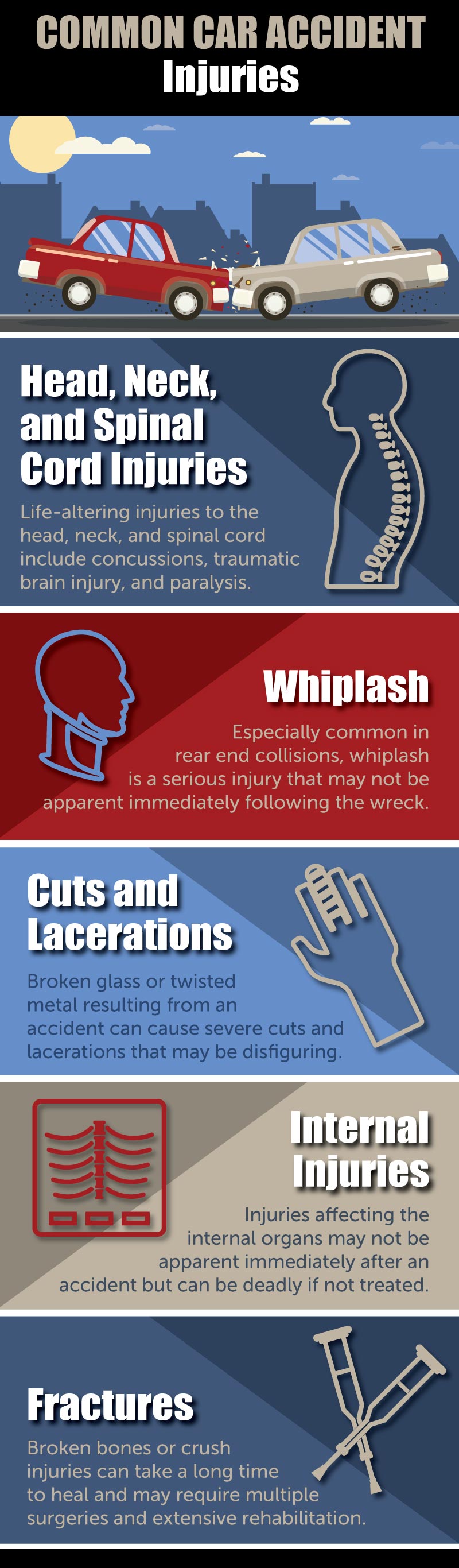
Credit: www.mccanninjurylaw.com
Frequently Asked Questions For Common Car Accident Injuries
What’S The Most Common Injury In A Car Accident?
The most common injury in a car accident is whiplash. It occurs when the head is jerked forward and then backwards, causing damage to the neck.
What Are 3 Types Of Injuries That Can Result From A Car Crash?
The three types of injuries that can result from a car crash are whiplash, bone fractures, and spinal cord injuries.
What Are The Common Internal Injuries From A Car Accident?
Internal injuries from a car accident can include whiplash, spinal cord injury, traumatic brain injury, and internal bleeding.
What Are The Most Common Types Of Car Accident Injuries?
The most common types of car accident injuries include whiplash, bone fractures, spinal cord injuries, traumatic brain injuries, back injuries, and internal bleeding.
Conclusion
Car accidents can lead to a variety of injuries, and understanding the most common ones is crucial for victims and their families. Whiplash is one of the most frequently occurring car accident injuries, affecting the ligaments, tendons, and muscles in the neck.
Traumatic brain injuries (TBI) can also result from car accidents, leading to long-term cognitive and physical impairments. Spinal cord injuries may cause paralysis in the form of quadriplegia or paraplegia. Back injuries, burns, and fractures are also commonly seen in car accident victims.
Internal injuries, including damage to muscles, lungs, liver, spleen, heart, or bowels, can occur due to improperly worn seatbelts. It is important for individuals involved in car accidents to seek prompt medical attention and legal assistance to protect their rights and receive the necessary compensation for their injuries.
Remember, prioritizing safety on the road is the best way to prevent these common car accident injuries.